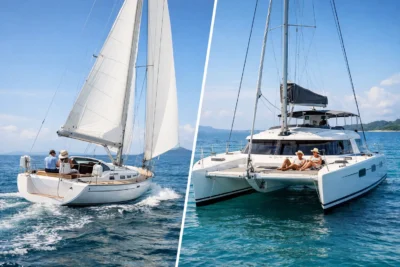
Spain is one of those places where getting qualified feels less like admin and more like the start of a new life on the water. If you are searching for a sailing licence course Spain option, you are probably not looking for paperwork alone. You want freedom – weekends under sail, proper coastal cruising, and the confidence to take the helm knowing you are trained, legal and ready.
That is exactly why Spain has become such a strong choice for aspiring skippers. The weather helps, the coastline delivers, and the training culture is built around real boating rather than theory for theory’s sake.
Why take a sailing licence course in Spain?
There is a practical reason first. Spain has a well-established recreational boating system, recognised training routes and enough marinas, coastal passages and stable weather windows to make learning feel natural. You are not studying navigation in the abstract. You are learning in an environment where people actually use their qualifications to get out on the water.
Then there is the lifestyle factor. A licence course here often feels more motivating than doing the same process somewhere with a shorter season or less active sailing scene. When your classroom leads straight to the marina, progress comes faster. You can picture what the qualification is for, and that matters.
For many people, Spain also offers flexibility. Some students live here full time, others travel over for an intensive course, and plenty combine a holiday with training. That makes the country especially attractive if you want to qualify efficiently without losing the excitement that got you interested in boating in the first place.
Which Spanish qualification do you actually need?
This is where people often get confused, because “sailing licence” can mean different things depending on your goal. It depends on the type of boat you want to use, the power or length involved, whether you plan to stay close to shore, and whether you want to sail only in Spain or more widely.
If you are new to boating and want a simple starting point, Spain offers entry-level recreational licences. These are often suitable for smaller craft and calmer plans on the water. If your aim is to skipper larger recreational boats and gain broader coastal privileges, the PER route is usually the one people look at first. It is one of the best-known Spanish qualifications because it opens the door to much more real autonomy.
If sailing matters specifically to you, not just motor boating, check whether the course includes the relevant sailing practices. In Spain, some qualifications require extra practical sailing training if you want your certificate to cover sailing boats rather than power alone. That detail matters. A course may look right on paper but still not match the boat you dream of using.
What a sailing licence course Spain programme usually includes
Most good programmes combine theory with practical training. That sounds obvious, but the balance matters. A course that is all classroom and no sea time will leave you underprepared. One that promises pure action with no grounding in regulations or navigation is not much better.
The theory side usually covers safety, buoyage, rules of the road, basic navigation, weather, chartwork and onboard responsibilities. Depending on the qualification, there may also be radio content and a formal exam. This is the part that gives you judgement, not just a certificate.
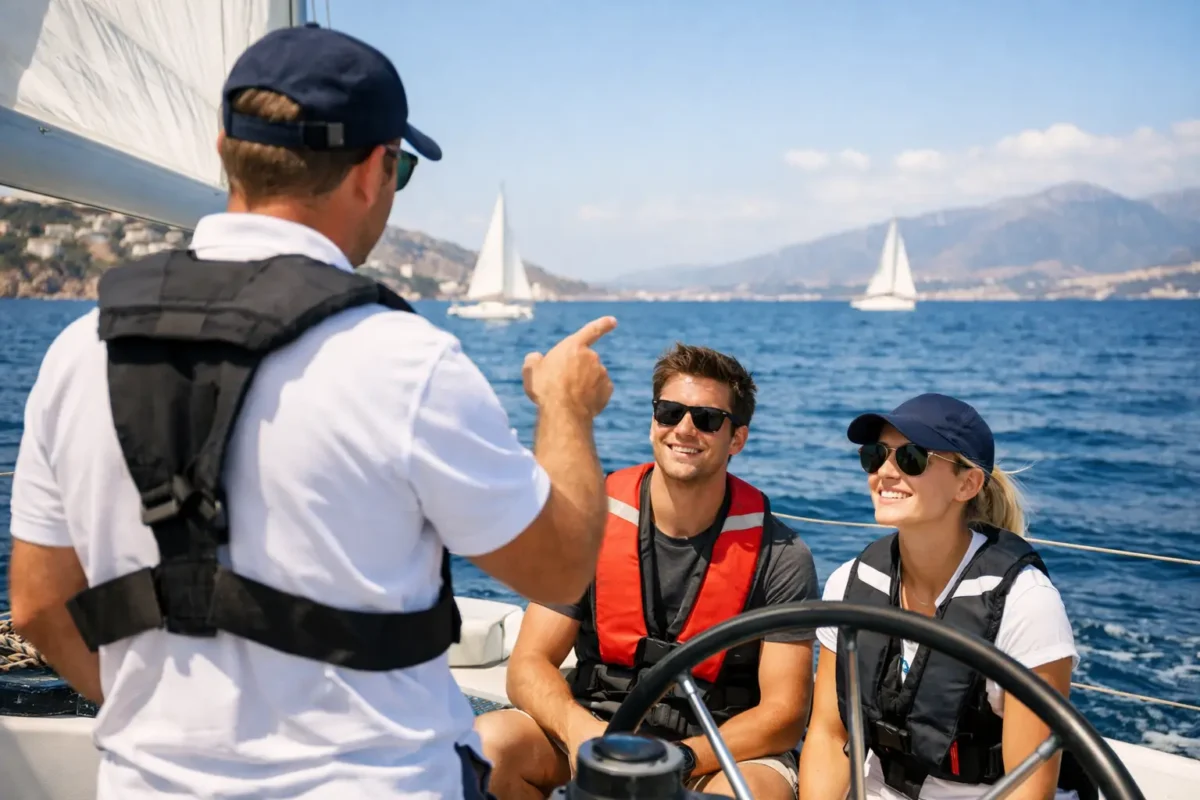
The practical side is where things click. You learn manoeuvres, mooring, safety drills, skipper decisions and how a boat behaves when conditions change. If sailing is included, expect work on sail trim, points of sail, tacking, gybing and handling under sail as part of the endorsed training.
The strongest schools do not treat practice as a box-ticking exercise. They train you to stay calm, act early and move with purpose. That is the difference between passing a course and becoming someone others trust onboard.
Intensive course or flexible schedule?
Both can work well. The right choice depends on how you learn and what your calendar looks like.
An intensive format suits people who want momentum. If you are focused, can absorb information quickly and like the idea of being immersed in the subject, it is an efficient route. It is also popular with students travelling to Spain specifically for the course. You keep your head in boating mode from start to finish and often come away with stronger continuity between theory and practical sessions.
A flexible schedule is often better if you are working full time, managing family commitments or simply prefer to learn in stages. Spreading training over several weekends can reduce pressure and give you more time to revise properly. The trade-off is that you need consistency. If sessions are too far apart, some of the learning can lose pace.
Neither route is automatically better. The best one is the format you will actually complete with energy and commitment.
How to choose the right school
Not every sailing school delivers the same experience, even when the qualification name is identical. This is where your decision really shapes the outcome.
Look first at operational credibility. A school with real boats, active instructors and a strong local presence tends to offer more grounded training than one built mainly around classroom sales. You want a team that spends serious time on the water, not one that treats practical training as an afterthought.
Experience matters too, but not just in years. Ask yourself whether the school feels organised, current and genuinely invested in students. Clear communication, transparent course structure and realistic expectations are all good signs. If everything sounds too easy, be careful. Good training should feel accessible, but it should never pretend responsibility at sea is casual.
Local knowledge is another advantage, especially if you plan to use your qualification in the same area. Training in an active coastal base such as Valencia gives you contact with real harbour approaches, marina procedures and Mediterranean boating conditions. For students wanting a complete route into boating, a specialist operator such as Alfa Náutica can also make sense because the journey does not stop at the course. You can move from training into practice, experiences and ongoing nautical support without starting again elsewhere.
Questions to ask before booking
Before paying for any sailing licence course Spain package, ask what is included and what is not. This saves surprises later.
Check whether the quoted price covers theory tuition, practical sessions, exam fees, study materials and any mandatory add-ons. Ask how many practical hours you will complete, what type of vessels are used, and whether the course is delivered in a format that suits your level. If you need sailing endorsement rather than power-only training, confirm that explicitly.
It is also worth asking about language support, especially if you are not confident dealing with nautical terminology. Some schools are better than others at helping international students or mixed-language groups. A professional team will explain the process clearly rather than expecting you to decode it yourself.
Is a Spanish licence right if you are a UK boater?
Sometimes yes, sometimes not. It depends on where you plan to navigate and how you plan to use the qualification.
If you are based in Spain, spend long periods there, charter there regularly or keep a boat in Spanish waters, taking your training locally can be a very smart move. You learn in the environment where you will actually boat, and that practical relevance is hard to beat.
If your main boating life is centred elsewhere, especially under different administrative or recognition frameworks, you should check compatibility before enrolling. Qualifications are not just about skill. They are also about how operators, insurers and local authorities recognise them in practice. A good school will be honest about that and help you understand the fit.
What makes the experience worth it
The real value of a sailing course is not the piece of paper at the end. It is the shift in what becomes possible afterwards. Day trips stop being something you book from the shore. They become something you plan. The coast changes when you can approach it as a skipper.
That is why choosing well matters. The right course gives you more than compliance. It gives you judgement, confidence and a proper start in boating. Spain is a brilliant place to make that start because the training can be both serious and energising at the same time.
If you are ready to move from passenger to skipper, choose a course that feels close to the real sea, not just the exam. The licence gets you legal. The training gets you ready. And that is where the adventure really begins.