The first time you take the helm, everything changes. The coast looks different, the water feels bigger, and the idea of going out under your own command suddenly stops being a daydream. If you are searching for a boat licence for beginners, the good news is that getting started is usually much simpler than people expect.
What tends to hold people back is not the sea. It is the confusion. Which qualification do you actually need? How long does it take? Is there an exam? Can you start with something basic and move up later? Those are the right questions, and once you understand the route, the whole process feels far more accessible.
What a boat licence for beginners really means
For most newcomers, a boat licence for beginners is not one single universal permit. It is the entry point into recreational boating, and the right option depends on what kind of boating you want to do, where you want to do it, and how much autonomy you want from day one.
Some people want the fastest route to enjoy small boats close to the coast. Others already know they want to charter larger vessels, plan longer trips, or build towards more advanced qualifications. Both routes are valid. The smartest starting point is not always the biggest certificate. It is the one that matches your next real step on the water.
If your aim is casual boating, short coastal outings, or getting comfortable with handling a vessel without overcomplicating the process, an entry-level qualification makes sense. If you already picture yourself taking friends out regularly or hiring a more capable boat on holiday, it may be worth beginning with a broader licence.
Which licence is best for beginners?
In Spain, beginners usually look at two common starting options: the Licencia de Navegación and the PNB. If you are planning to boat around places like Valencia, these are often the first serious choices.
Licencia de Navegación
This is often the quickest and most accessible option for total beginners. It is designed for recreational use and gives you a straightforward way to start enjoying boating without the weight of a full theory exam. For many people, that makes it the least intimidating first step.
It suits those who want to handle smaller boats, stay within the limits set by the qualification, and start building practical confidence. If your main goal is to get afloat soon, enjoy coastal trips, and learn the basics safely, this can be a very attractive entry route.
PNB
The PNB, or Patrón de Navegación Básica, is a step up. It involves more theory and typically appeals to people who want greater range, more flexibility, and a stronger technical foundation from the start.
This is often the better fit if you are serious about boating and see yourself progressing quickly. It demands more commitment, but it also opens more possibilities. That trade-off matters. A faster course can get you on the water sooner, while a broader qualification may save you from needing to upgrade almost immediately.
How to choose without overthinking it
A lot of beginners stall because they think they must make the perfect choice first time. You do not. You need a sensible one.
Start by asking yourself three practical questions. What type of boat do you actually want to use? How often do you expect to go out? And are you looking for easy access to boating now, or a qualification that supports bigger plans later?
If you want a clean, low-barrier way in, the entry-level route is often ideal. If you already know the sea is going to become a serious part of your lifestyle, going for a more complete qualification from the beginning may be the smarter move.
There is also the confidence factor. Some complete beginners feel more comfortable starting with a shorter, more practical course. Others prefer the structure of theory plus practice because it gives them a stronger sense of control. Neither approach is better by default. It depends on how you learn.
What you will actually learn
A good beginner course does more than tick a legal box. It gives you the habits that make boating safer, calmer and far more enjoyable.
You can expect to cover the essentials of safety at sea, basic rules of navigation, manoeuvring, harbour awareness, emergency procedures and responsible boat handling. On the practical side, you begin to understand how a vessel responds, how wind and space affect movement, and why good decisions matter more than speed.
That last point is worth keeping in mind. New boaters often imagine the challenge is technical. In reality, the biggest shift is judgement. Knowing when to slow down, when to reassess conditions, and when not to push your luck is what turns a beginner into a reliable skipper.
Is it difficult to pass?
Usually, no. It is demanding enough to matter, but it is not designed to catch you out.
For beginners, the hardest part is often unfamiliar terminology rather than the boating itself. Once the language starts making sense, the rest becomes much easier to absorb. Practical training tends to be the point where everything clicks. What looked abstract on paper suddenly feels obvious when you are aboard.
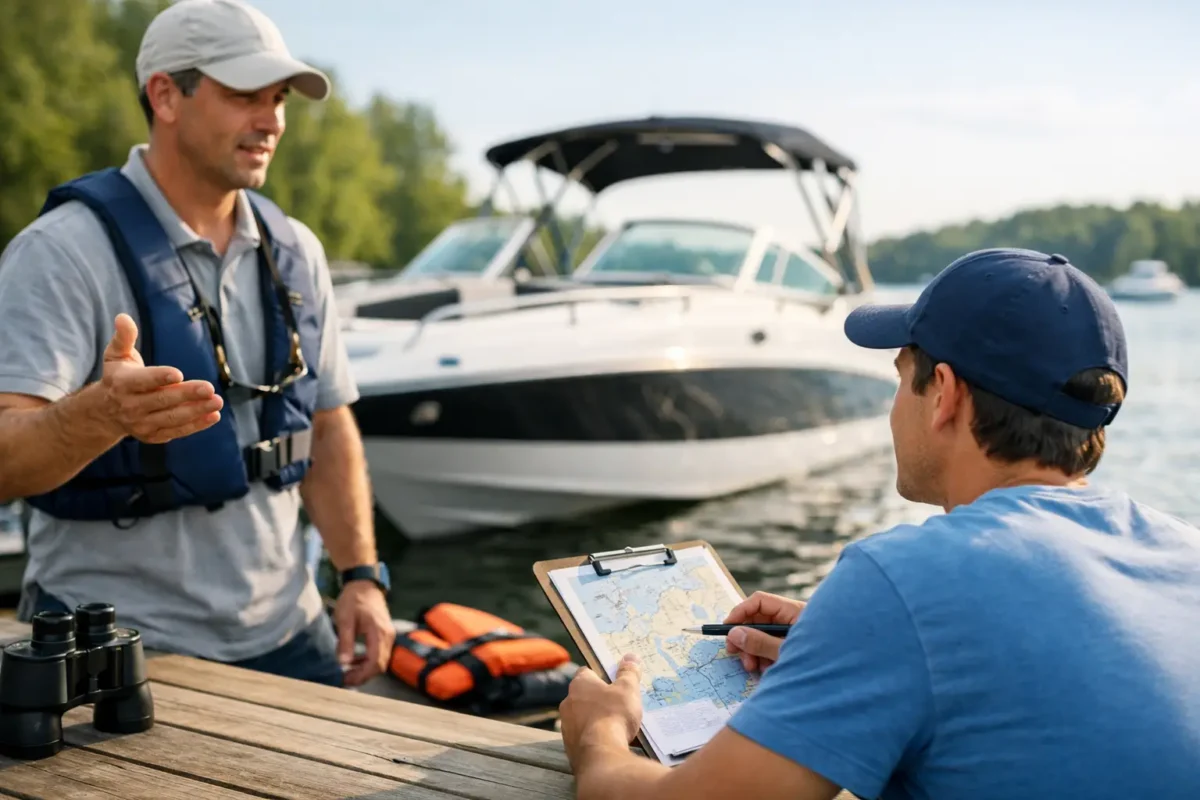
The key is to train with an experienced school that teaches for real-world confidence, not just for the certificate. A good instructor will keep things clear, practical and calm. You should come away feeling capable, not merely qualified.
How long does it take?
This depends on the licence and the format you choose. Some entry options can be completed quickly, while more advanced beginner qualifications require extra study and scheduled practical sessions.
That flexibility is useful. If you have a busy working week, an intensive format can get you moving fast. If you prefer to absorb things steadily, a more gradual pace may leave you feeling more confident by the time you finish.
The right timeline is not the shortest one. It is the one that helps you retain what you learn and step aboard without hesitation.
What does a beginner boat licence cost?
Cost varies depending on the qualification, the training centre, the practical elements included and any additional fees linked to administration or medical requirements.
Cheaper is not always better. If a course looks unusually low-priced, check what is actually included. Some prices exclude practical training, study materials or processing fees. Others appear higher at first glance but include everything you need to qualify cleanly.
For beginners, transparency matters more than headline price. You want to know exactly what you are paying for and what you will have in your hands at the end of the process.
Why practical training matters more than most people think
A licence is the start, not the finish. This is where many first-time boaters either build real confidence or end up qualified but hesitant.
Time on the water changes everything. Repeating manoeuvres, getting used to marina approaches, reading conditions and feeling how the boat behaves in motion gives you the kind of confidence no classroom can replace. If you can train in a location with active boating conditions, even better. It prepares you for reality, not a perfect-weather version of it.
That is one reason many new skippers value centres with broad on-water experience, local knowledge and a serious training fleet. In a place like Valencia, where boating is part of everyday coastal life, the learning curve can feel much more real and much more exciting.
Common mistakes beginners make
The biggest mistake is choosing a qualification based on ego rather than use. Getting the highest possible licence sounds impressive, but if it delays your start or overwhelms you, it may not be the best first move.
Another common one is treating the course as a one-off task instead of the beginning of a boating life. The people who progress fastest are the ones who keep going out, keep practising and keep asking questions.
And finally, many beginners underestimate how enjoyable the learning process can be. This is not just admin for the sake of paperwork. It is your way into more freedom, more coastline, more weekends done properly.
Your first step on the water
If you are looking for a boat licence for beginners, think less about bureaucracy and more about access. The right qualification gives you access to the sea on your own terms. It gives you the confidence to stop relying on other people, start making your own plans, and enjoy the coast with a different kind of freedom.
The best route is the one that gets you afloat safely, suits your ambitions, and leaves you wanting more. Start there, learn properly, and let the sea do the rest.