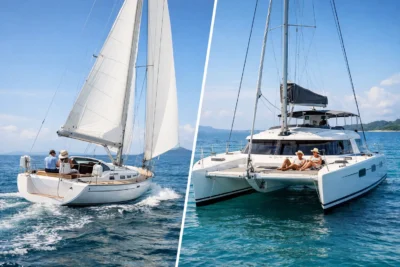
If you are weighing up skipper yacht vs PER, you are probably at a very good point in your nautical journey: you already want more than a casual day afloat. The real question is not which qualification sounds better on paper. It is which one gives you the freedom you will actually use, without paying for range, power or responsibilities you may not need yet.
For many boaters, PER is the license that changes everything. It opens the door to proper independent cruising, weekend plans, coastal passages and charter options that feel like a serious upgrade from entry-level boating. Yacht Skipper goes further. More distance offshore, larger boats, more scope for ambitious itineraries. More sea, basically. But more is only better if it matches the kind of skipper you want to become.
Yacht skipper vs PER at a glance
The simplest way to understand Patrón Yate vs PER is this: PER is the practical sweet spot for a huge number of recreational boaters, while Patrón de Yate is the step for people who want to stretch their horizon, literally and figuratively.
With PER, you can command recreational motor boats and sailing yachts within the legal limits of that qualification, making it ideal for coastal cruising, island crossings in certain authorized routes and a wide range of leisure navigation plans. It is often the first license that feels genuinely liberating because it takes you well beyond the basics.
Yacht Skipper is the next level up. It is designed for skippers who already have the PER and want greater offshore capability, more confidence for longer passages and access to larger recreational vessels. If your idea of boating includes making serious plans rather than staying close to the shore, this is where the map starts to widen.
What does the PER actually allow?
PER is popular for a reason. It covers the boating lifestyle many people imagine when they first decide to qualify. You can skipper recreational craft up to the permitted length, navigate with broader autonomy than a basic license and, with the appropriate practical training, add sailing and other extensions allowed under Spanish regulations.
In real life, that means you can move from occasional passenger to proper skipper. Day trips stop being dependent on a hired captain. Weekends become more flexible. Charter options increase. You can plan with your crew, check the forecast, leave the marina and feel that the boat is yours to command.
For plenty of owners and charter clients, PER is enough for years. Sometimes forever. If your plans revolve around coastal routes, short crossings and enjoyable leisure use rather than long offshore legs, PER may be the qualification that offers the best balance between accessibility and freedom.
What extra does Patrón de Yate give you?
This is where the comparison becomes more interesting. Yacht Pattern is not just PER with a slightly grander title. It is a qualification for boaters who want more reach and more responsibility.
The main attraction is its broader offshore range and the ability to command larger recreational vessels within the legal framework. That changes the type of route you can consider and the confidence with which you can consider it. Longer passages become realistic. More demanding planning becomes part of the game. Weather, fuel strategy, watchkeeping and navigation decisions take on a different weight.
That is exactly why many experienced recreational skippers see Yacht Pattern as the point where boating feels less like extended coastal leisure and more like true passage-making. Not commercial seamanship, but certainly a more advanced form of private navigation.
PER or Yacht Skipper: which one fits your plans?
The right choice depends less on prestige and more on use.
If you want to hire a boat On holiday, enjoy regular coastal cruising, learn properly and keep your boating practical, PER is often the smartest move. It gets you a powerful level of autonomy without forcing you into a qualification you may not fully exploit. For someone living near the coast, spending summers afloat, or building confidence step by step, that matters.
If you already know you want longer routes, bigger challenges and a broader operating range, Patrón de Yate makes more sense. The people who benefit most from it are usually not choosing with hesitation. They already feel the pull of the next stage. They want to go further, plan more seriously and grow into a skipper with a wider comfort zone.
The mistake is assuming everyone should jump straight to the highest possible level. Nautical training works best when it matches real ambition. The sea rewards competence, not titles collected too early.
The training difference in yacht pattern vs PER
PER is demanding enough to feel serious, but still accessible for adults balancing work, family and limited free time. It is a strong entry into real nautical competence. The theory builds navigational foundations, regulations, safety knowledge and operational judgment. The practical side turns that knowledge into habit.
Yacht Skipper asks more of you because it should. You are progressing into navigation with greater range and complexity, so the theory and practical expectations naturally move up a level. It is not just a bigger syllabus for the sake of it. It reflects a bigger decision-making environment at sea.
That matters if you are comparing effort as well as privilege. PER often feels like a bold but realistic first milestone. Yate Skipper is usually best approached once PER knowledge and sea time have started to settle into instinct.
Cost, time and value
For many students, this is the real decision point. Not because they want the cheapest route, but because they want value.
PER generally requires less investment in both time and budget than Patrón de Yate. That makes it a strong option if you want to get on the water sooner and begin using your qualification immediately. There is real value in learning, qualifying and then building hours as skipper before deciding whether you need more.
Yacht Skipper costs more because it gives more. If that extra capability aligns with your plans, the investment is easy to justify. If not, it can become a qualification that looks impressive but feels underused.
This is one of those cases where practical honesty beats ambition. If most of your boating over the next two or three seasons will be local, social and coastal, PER is often the sharper choice. If you are already planning bigger passages and more advanced ownership or charter use, Patrón de Yate can save you from outgrowing your license too quickly.
Who usually chooses PER?
PER tends to suit three types of people especially well. The first is the enthusiastic newcomer who wants proper independence on the water without taking on more than necessary at the start. The second is the leisure boater who values flexibility, weekends away and coastal cruising with friends or family. The third is the future progression student who wants to qualify now, navigate a lot, and step up later with stronger practical foundations.
That last profile is worth paying attention to. Starting with PER is not thinking small. Remove the opposite. It can be the fastest route to becoming a more competent skipper because you start using what you learn sooner.
Who should seriously consider becoming a Yacht Captain?
If you already feel limited reading the PER privileges, Patrón de Yate is probably calling your name. It suits boaters with clear medium-term ambition: longer offshore routes, larger yachts, more demanding passage planning and a stronger appetite for navigation beyond straightforward coastal leisure.
It is also a smart move for owners or regular charter users who know their boating life is scaling up. Once your plans become bigger than sheltered bays, marina lunches and short hops, the additional range stops being theoretical and starts becoming very practical.
In a training environment with real boats, experienced instructors and a clear route from qualification to actual time at sea, that progression feels natural. That is where a 360-degree nautical brand such as Alfa Náutica has a real advantage: training does not sit in isolation from real boating life.
The question most people should ask first
Before choosing between skipper yacht vs PER, forget the badge and picture your next season on the water. Are you imagining day cruising, weekends aboard, relaxed passages and a license you can start using often? Or are you already plotting longer routes and wanting the confidence that comes with greater offshore scope?
If you will use PER heavily, it is a brilliant choice. If you will quickly push against its limits, go further. The best license is not the one with the greatest name. It is the one that gets you afloat more, teaches you well and keeps your next step wide open.
The sea has a way of making honest decisions look smart later. Choose the qualification that matches the adventure you are truly ready to live, and the miles ahead will make much more sense.