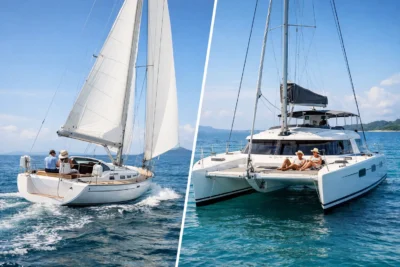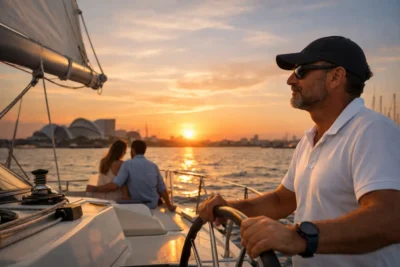
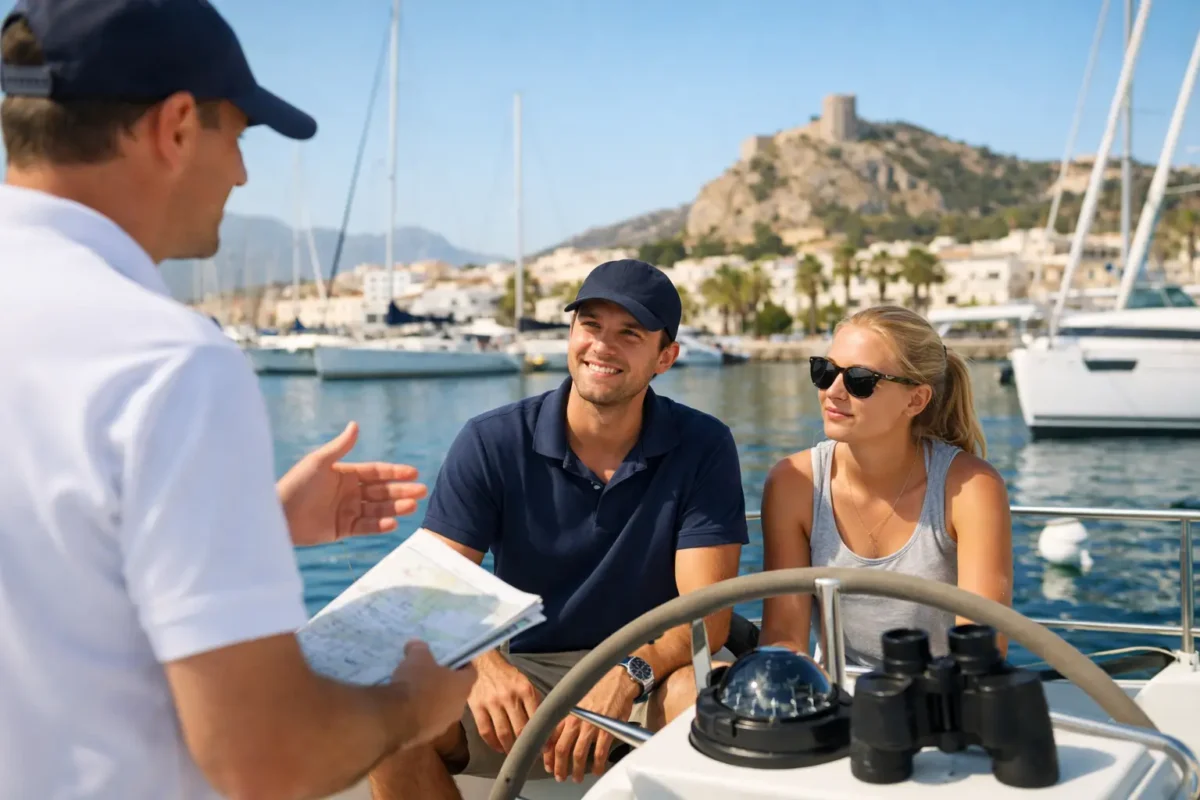
The jump from enthusiastic crew to confident skipper usually happens in one moment – the day you realize you do not just want to be on the water, you want to be the one making the decisions. That is exactly why yacht master training Spain attracts so many serious sailors. You get long seasons, varied cruising grounds, busy marinas, offshore passages and weather that lets you train properly rather than waiting weeks for the right window.
Spain is not one thing, though. Training in Valencia feels different from training in the Balearics, Galicia or the Costa del Sol. The right choice depends on your current experience, the qualification route you want to follow and the kind of skipper you plan to become.
Why yacht master training Spain makes sense
If your goal is real sea time, Spain gives you plenty of it. The coastline is extensive, the conditions are diverse and the boating culture is active for much of the year. That matters because Yachtmaster-level development is not only about passing an exam. It is about handling a yacht when the marina is tight, when the wind shifts unexpectedly, when night falls offshore and when your crew looks to you for calm, clear decisions.
Spain is especially attractive for sailors who want a practical learning environment. In one training base, you might cover pilotage, tidal awareness, watchkeeping, passage planning, marine maneuvers and man overboard recovery in a short space of time. In another, the focus may read more heavily towards offshore mileage and open-water confidence. Neither is automatically better. It depends on the gaps you need to close.
For many people, Spain also offers a more enjoyable rhythm training. You can combine intensive tuition with a destination that still feels exciting. That doesn't mean it is a holiday course. Remove the opposite. Good training days are demanding, and at the end of them you feel it. But learning in a setting that keeps you motivated makes a real difference when you are building hours and sharpening judgment.
What qualification are people usually talking about?
When people search for yacht master training Spain, they are often referring to RYA Yachtmaster preparation, usually Coastal or Offshore. That route is widely recognized in international recreational and professional yachting. It is practical, respected and built around competence on the water rather than theory alone.
That said, Spain also has its own official recreational qualifications, and this is where some confusion starts. If you live in Spain, keep a boat there or want a broader boating pathway, Spanish qualifications such as PER, Yacht Master and Yacht Captain may also matter. They are not the same as the Yachtmaster scheme, and one does not automatically replace the other.
For some sailors, the smartest route is to combine systems. You might build local legal and practical knowledge through Spanish training, then pursue an RYA pathway for wider cruising or professional opportunities. If you are unsure which route fits your plans, that is not a minor detail to sort out later. It should shape your training choice from day one.
How yacht master training in Spain usually works
Most students do not arrive as complete beginners. Yachtmaster preparation assumes previous sea time, navigation knowledge and a certain level of boat handling. Training schools normally expect you to have logged thousands, completed earlier theory stages and spent enough time aboard to understand basic seamanship without constant prompting.
The structure often combines shore-based review with intensive practical training. You will usually work on passage planning, collision regulations, meteorology, navigation, safety routines, close-quarters handling and command presence. Then everything gets tested in real situations, often under time pressure and changing conditions.
The exam itself is not a classroom paper. It is a practical assessment conducted on board, where an examiner looks at how you think, communicate and act. This is why experienced sailors still take preparation courses. Knowledge matters, but command matters more.
Choosing the right place for yacht master training Spain
Location changes the character of your training. Valencia, for example, is a strong option for sailors who want access to a major Mediterranean base with busy traffic, modern facilities and a long boating season. It gives you room to build confidence in realistic, active conditions without the logistical complexity of some island programs.
The Balearics can be brilliant for mileage-building and coastal passage work, particularly if you want to train in waters that feel immediately relevant to Mediterranean cruising. The trade-off is that costs can be higher and scheduling can be more affected by seasonal demand.
Northern Spain offers a different kind of challenge. Conditions can be tougher, weather windows narrower and seamanship lessons sharper. For some candidates that is ideal. For others, especially those still consolidating core skills, it may add pressure before they are ready.
So do not choose purely on scenery. Choose based on what kind of skipper you need to become over the next twelve months.
What to look for in a training school
The school matters as much as the sea area. A polished website is not enough. You want instructors who spend serious time on the water, boats that are maintained properly and programs that do not treat every student as if they are starting from the same point.
Ask how much of the course is genuinely practical. Ask what kind of boats are used and how training days are structured. Ask whether the focus is on simply getting candidates through an exam or on making them more capable in command. Those are not always the same thing.
A good school will also be honest about readiness. If your experience is too thin for Yachtmaster preparation, the right answer is not to rush you through. It is to help you build miles, improve weaker areas and return better prepared. That kind of honesty saves time, money and frustration.
For sailors already based in eastern Spain or planning to train around Valencia, working with an operator that understands both formal training and real recreational boating can be a major advantage. That practical, end-to-end perspective is one reason businesses such as Alfa Náutica stand out in the local market.
Cost, time and the reality behind the certificate
One of the most common questions is price, and the only fair answer is: it varies. Yachtmaster preparation in Spain depends on course length, boat type, accommodation, included mileage, instructor ratio and whether exam fees or theory modules are separate.
Cheap is not always good value. If the program leaves you underprepared, you may end up paying twice. Equally, the most expensive option is not automatically the best. What matters is how much meaningful helmet time, decision-making practice and feedback you receive.
Time is another factor people underestimate. Even if the prep course itself is short, becoming exam-ready rarely is. You may need months of sailing, theory review and logbook building before a training week really delivers. The strongest candidates usually arrive with sea time already earned, not expected for.
Common mistakes that slow candidates down
A lot of sailors focus too heavily on the exam maneuvers and not enough on skippering as a whole. They rehear things, review lights and shapes, and forget that examiners are also judging situational awareness, leadership and composure. If your crew briefing is vague or your plan falls apart under pressure, technical knowledge will not rescue you.
Another mistake is choosing a course that is too advanced for current experience. Ambition is useful. Pretending you are ready is not. There is no shame in building up through extra practical days, local passages or previous certificates first.
Finally, some candidates train in conditions that are too narrow. If you only sail in flat water and daylight, gaps appear quickly. The more varied your preparation, the more natural your decision-making becomes.
Is Spain the right fit for you?
If you want volume of sailing, Mediterranean relevance and a training environment that combines challenge with strong accessibility, Spain is a very smart choice. If you specifically need heavy tidal training every week, another location might suit part of your pathway better. If your aim is to skipper confidently in warm-weather cruising grounds, Spain is hard to ignore.
The best training route is not the one that sounds most impressive online. It is the one that matches your present level, your cruising plans and the standard you want to hold when nobody is watching and the decisions are yours alone.
Pick a base that gives you real water time. Pick instructors who tell you the truth. Then commit properly. The sea prepared skippers, and the sooner you train with purpose, the sooner the helm feels like home.