You spot a jet ski cutting across flat water, the spray flying, the coastline opening up ahead, and the question lands fast: what license for jet ski use do you actually need in Spain? The answer is not always the same, because it depends on whether you are renting, owning, riding under supervision, or heading out on your own. Get this right and the experience is pure freedom. Get it wrong and you can end up with a booking refused, a fine, or a machine you are not legally allowed to use.
What license for jet ski riders usually need
In Spain, a jet ski is generally treated as a recreational craft with its own rules, and in many cases you do need a valid qualification to operate one independently. The exact requirement depends on the type of use and the conditions set by the operator, but the basic principle is simple: if you want to take a jet ski out legally and with autonomy, you should expect to need an appropriate Spanish nautical qualification or an accepted equivalent.
That is where many people get caught out. They assume a driving license for a car covers it. It does not. Road and sea are separate worlds, and the sea comes with its own safety, navigation and responsibility standards.
The key difference: supervised hire or independent use
This is the part that matters most.
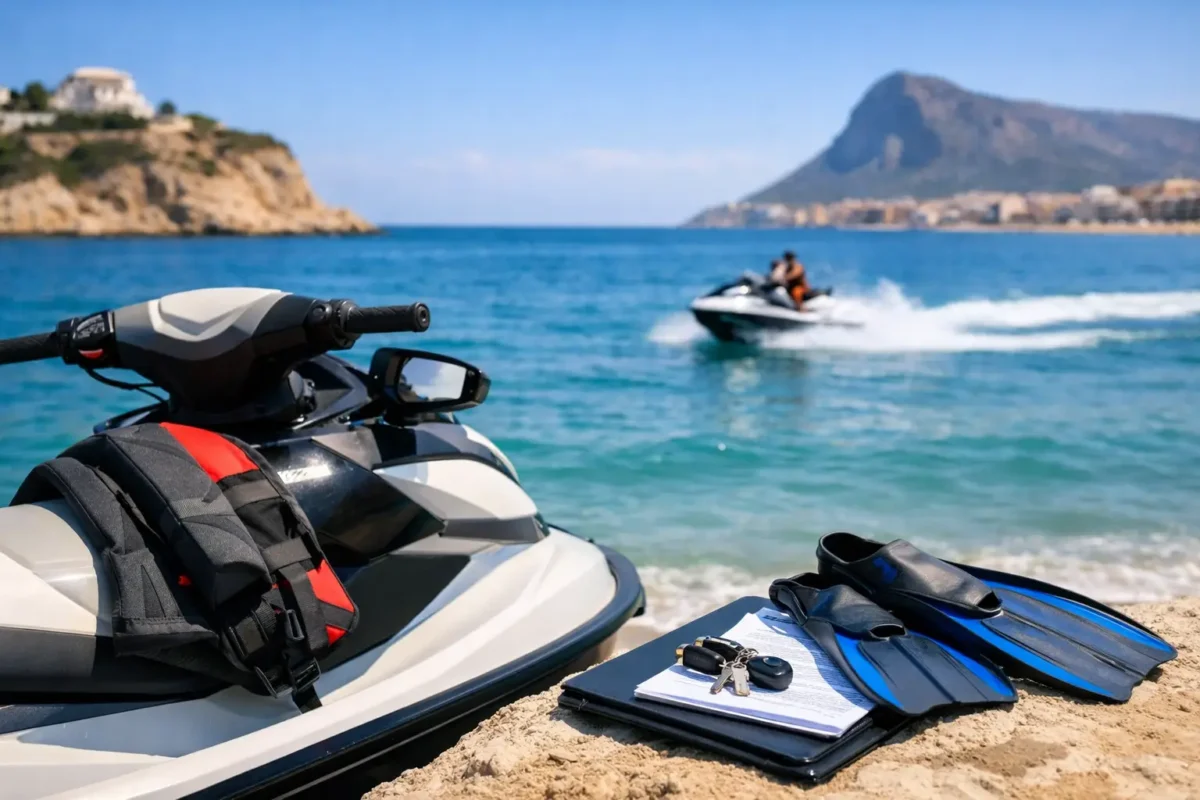
If you book a guided or supervised jet ski experience with an authorized operator, you may not need a full nautical license yourself. In these cases, the activity is run within a controlled framework. The route, briefing, safety equipment and operating conditions are managed by the company, and that changes the legal practicalities.
If, however, you want to operate a jet ski independently, rent one without guided supervision, or use your own machine, the expectation is different. Then you are usually stepping into the territory of formal qualifications.
So when people ask what license for jet ski use is required, the real follow-up question is this: are you joining an organized experience, or do you want to ride as a skipper in your own right?
Which qualification is commonly accepted
In Spain, the License of Navigation is often the most accessible entry point for people who want to start operating certain recreational craft, and it can also be relevant for jet ski use depending on the category and the operator's requirements. It is popular because it is quicker and more approachable than higher-level qualifications, while still giving you a legal framework and a basic understanding of safety at sea.
For many new riders, this is the qualification that makes the most sense. It is designed for recreational users who want to stop depending entirely on guided outings and start gaining autonomy.
That said, some cases may call for a higher qualification such as PNB or PER, especially if your wider plan is not just to ride a jet ski but to move into broader boating, coastal navigation or larger craft. If you are already thinking beyond one activity, it can be smarter to choose a qualification that gives you more room to grow.
Why it is not just a paperwork issue
People sometimes look at a jet ski and think of it as a toy with an engine. It is not. It is a powerful craft capable of high speed, sudden maneuvers and serious incidents if handled badly. The license question is tied to safety for a reason.
A proper qualification helps you understand right of way, coastal limits, navigation areas, weather awareness, distance from beaches, and how to react when conditions change. That knowledge matters more than confidence. Plenty of beginners feel brave on flat water for ten minutes. That is not the same as being prepared.
The trade-off is simple. A guided ride gives you simplicity and immediate fun. A qualification gives you freedom, flexibility and legal independence.
What if you are a tourist?
For visitors, the situation can be slightly more nuanced. Some operators may accept recognized foreign qualifications, while others will require documentation that fits Spanish rules or restrict access to guided experiences only. This is one of those areas where assumptions cause problems.
If you are traveling to the coast and planning to book on the day, do not wait until you arrive at the marina to ask. Check in advance whether your existing qualification is valid for the type of jet ski activity you want. An operator may have internal safety policies that are stricter than the legal minimum, and that is entirely normal.
For holidaymakers, guided jet ski routes are often the easiest option because they remove the uncertainty. You get the thrill, the coastline, the speed and the support without needing to sort out a full qualification first.
Owning a jet ski changes the picture
If you are buying or already own a jet ski, the answer to what license for jet ski use becomes more serious. Ownership usually means responsibility for legal operation, storage, insurance, registration matters where applicable, and compliance with local maritime rules.
This is where the romantic idea of spontaneous weekend riding meets reality. You are not simply paying for fuel and launching whenever you like. You need the right paperwork, and you need to understand where and how you are allowed to operate.
For that reason, many owners decide to get properly trained from the start rather than trying to patch things together later. It saves time, avoids expensive mistakes and gives you much more confidence on the water.
Age, safety rules and local restrictions
Even with the right qualification, there can still be age restrictions, operating rules and local limitations depending on the area and the type of activity. Beaches, ports and protected coastal zones often have controlled access or speed restrictions. There may also be seasonal enforcement changes in busy areas.
That is why the license alone is not the whole story. Legal riding also means respecting navigation channels, distance rules near swimmers, and the instructions of local maritime authorities. The sea rewards freedom, but only when it is backed by discipline.
This is especially relevant in high-traffic coastal destinations. During peak season, the margin for error is smaller. More boats, more paddle boards, more swimmers, more rental traffic. A rider who does not understand the rules is not only risking a penalty. They are creating danger for everyone nearby.
Is the Navigation License enough?
Often, yes – but not automatically in every scenario.
The License of Navigation is attractive because it is a practical first step into the nautical world. For many recreational users in Spain, it covers exactly the level they need to begin enjoying the water legally and confidently. If your goal is simple personal use within the limits of that qualification, it can be the right fit.
But if your ambitions are bigger, it may be worth thinking ahead. If you can already see yourself hiring boats, making longer coastal trips or moving up to larger craft, starting with a broader qualification could be better value. It depends on whether you want access for one activity or a genuine route into life at sea.
The smartest way to decide
Start with your real objective, not the minimum legal hurdle.
If you only want a high-energy day out on holiday, a supervised jet ski experience may be all you need. It is quick, exciting and low-friction. If you want to ride regularly, rent independently, or build confidence as a skipper, get qualified. That is the moment the experience shifts from occasional excitement to real autonomy.
For adults around Valencia and the wider Spanish coast, this is often the gateway into something bigger. A first jet ski session leads to a Navigation License. That leads to GNP or PER. Then come longer days at sea, charter plans, and a very different relationship with the coast. The best nautical journeys tend to start exactly like this – with one practical question and a strong appetite for freedom.
Before you book or enroll
Check three things first. Ask whether the activity is guided or independent, ask which qualification is accepted, and ask what documentation you must bring on the day. Those three questions save a lot of wasted time.
If you are based in Valencia or planning time on this stretch of coast, getting advice from a specialist nautical school makes the process much easier. A team with real operational experience can tell you not only what is legal, but what is actually useful for the kind of boating life you want. Alfa Náutica works with that full-picture approach every day, from training to experiences on the water.
The sea is always better when there is no hesitation at the dock. Know your license, know your limits, and then go and enjoy the ride properly.